02 February 2020

A fourth yarn - about me, not sailing

I wrote this for a friend in Africa - a young man I proudly consider an honorary brother - and his siblings, and have decided to post it here. One day I may write an autobiography, and all I'll have to do is collate all these "yarns" and stitch them together into something sensible. My (2nd - I have another who I am trying to get an antenna he bought to) young brother could relate to these stories: where he is living now has open drains and problems with floods. The sister I mention in this story is my adoptive sister: I also have a birth sister. 


When I was a teenager, in the 1970s, I lived in a town called Mackay (see https://en.wikipedia.org/wiki/Mackay,_Queensland), in the state of Queensland. Mackay is a fairly flat town - it has ONE small hill in the town, we used to call "the hill" (it's real name was - and this is surprising, given how small it was - Mount Bassett). The ocean there had a very large tide range - from high tide to low would vary from four to seven metres. Unfortunately, that meant our stormwater drainage for the town sometimes would only work when the tide was out. It didn't rain often, though - only in part of summer (December-January), but for those months everything was wet.

I was with my adoptive family then, and my sister, Ann, and I often had to walk through shallow flood waters to get to school. People shouldn't normally walk through flood waters because they can hide areas where the soil has been washed away, but the flood water we were walking through was still, not flowing, so we knew the soil was OK. Ann hated that because she could feel tadpoles wriggling from time to time :) (Our backyard stayed so wet one year that we had ducks fly in for a couple of days.)

We carried a towel with us, and when we got to school, we would dry our feet and put our shoes on. The school insisted we wear shoes, but we hated that - even when there were no floodwaters, we would carry our shoes with us and only put them on when we were at school.

Our feet grew fairly tough, and we used to show off in front of the tourists by walking slowly across the hot bitumen on the roads in summer. My feet are a lot softer now, but I still prefer to go barefoot when we can. In fact, we had a local politician, Fiona Richardson (see https://en.wikipedia.org/wiki/Fiona_Richardson and https://politicalmusingsofkayleen.blogspot.com/2019/08/in-memorium-and-exhortation-to-engage.html), who I used to write to about many things before she passed away: I heard her say in an interview that when she was growing up in Tanzania, she used to go barefoot and still preferred that, and mentioned that I also preferred being barefoot. When she replied to that email, she crossed out "Dear Kayleen", and wrote "Dear fellow barefoot advocate" :)

Going back to Queensland, we rented a house in the style called a "Queenslander": it had the house up high, so floodwater could pass through underneath - and that gave us a cooler place in the summer. (A lot of people these days in Queensland have air conditioning, but we didn't, and my adoptive parents never liked air conditioning - we used fans and a few other tricks like wet cloths around the neck instead.) We would listen to the forecast, and depending on how much rain was forecast, we would put anything that needed to be kept dry up on blocks to keep it above the floodwater.

At that time, the streets in Mackay didn't have pipes to drain stormwater: they had open drains, about 1.5 to 2 m deep on either side of the road. When the tide was in, the stormwater would sit in those drains until the tide went out, and then it would drain into the ocean. If there was enough floodwater to cover the road so the drains weren't visible (another reason no-one should walk through floodwater - there might be holes you don't know about), us local people knew not to park close the edge of the road, but we would find occasional tourists who didn't, and would do what we called "a southern park" where their car would go part way into the drain. Next morning, we would see the car sitting sideways, half into the drain (no-one was ever hurt by this: they were moving slowly, and the cars didn't go far, but they did tip right over). After I left Mackay, the local Council replaced the open drains with buried pipes.

When I went to University, it was 1,000 km away, in Brisbane, at University of Queensland (see https://en.wikipedia.org/wiki/University_of_Queensland). I have quite a few stories from there, but I'll just tell you of my friend from Finland. His name was Marti Kankunnen - but there is a particular way of pronouncing that, with what are called rolled r's, and not many Australians could handle that in those days, so he used to introduce himself by saying "Gidday, my name is Marti K, but you can call me Bill". :) (While at Uni, he went back to Finland, and his girlfriend says he complained all the time about the cold, but she - despite having only lived in northern Australia - wasn't affected by the cold.)

When I finished Uni, I started work at a company in Mackay, but most of the projects we were working on were inland from Mackay, at towns like Moranbah (http://www.aussietowns.com.au/town/moranbah-qld). These days, we only send one or a few people to a site, and transmit everything over the Internet, but there was no Internet in those days - in fact, I can remember the excitement at our company when we got our first electric typewriter, so we went to site a lot more. That meant a lot more driving - up to 1,000 km in a day, which I wouldn't be able to do these days. When I started, I was told "You'll need a car: make sure it's a good one". (I bought a small car, but the company would pay me for using it, which is how I was able to afford that.)

We would drive inland from Mackay, and after about 20 km we went up a steep hill range until we got onto a plateau. It was only a few hundred metres higher, but cars in those days didn't have computers, and my car used to run very badly on the plateau until a friendly mechanic showed me how to make a small change to fuel-air mixture, and it would run properly. So I would drive to the top of the plateau, pull over to the side of the road, hop out with a small screwdriver, make a change, then get back in and keep driving :)

There were a lot of accidents, incidentally, because people were careless about driving then. I won't tell you about those, but there was one funny story about a boss of mine who hit a big pothole, and found he could only drive in reverse - he had to drive backwards for 30 kilometres to get help :)

The country we were driving through was flat, what we call "scrubby". I lost all of my photos from that time when I was living on my small boat in the 1990s, because they got damp. We didn't have digital cameras back then. The nearest I can find to give you an idea of what it was like is at https://www.outbackqueensland.com.au/wp-content/uploads/2019/02/Cunnamulla_DJI_0703-rsz1048x699.jpg. The main difference is that where I was the ground was more red with a very fine dust called bulldust - which is also a slang for lies (see https://en.wikipedia.org/wiki/Bulldust). I worked in Queensland for 3 years, and then kept that car for another 13 years, and even after the 13 years I was still finding that fine red dust in places in the car - which is not bulldust :)

It was very hot, but I liked that country. In 2012, the company I work for sent me to Mongolia, where I worked for a few weeks in the Gobi Desert (see https://en.wikipedia.org/wiki/Gobi_Desert). Except that it didn't have trees (or many roads), the country in the Gobi Desert reminded me of Queensland. We had digital cameras then, of course, so I've attached a couple of photos. You'll see camels in those photos: Australia also has wild camels - they were brought here, along with herders from India (wrongly referred to as being from Afghanistan), in the 1800s and have thrived - see https://en.wikipedia.org/wiki/Australian_feral_camel.

A couple of the things I particularly remember from that trip is that one of the local dishes was almost exactly the same as one my adoptive mother used to make, and the people I was working with showed me a small plant with white flowers that they could use for salt - it had a garlic taste, apparently.

I made friends with our receptionist in our office in Ulaanbaatar (I worked there for a few days to finish my report), and we used to email each other until she left the company a couple of years ago. When I went there, I had just missed their festival called "Naadam" (see https://en.wikipedia.org/wiki/Naadam), which involves wrestling, horse riding, and archery, which she loved going to.

Unfortunately, Ulaanbaatar (see https://en.wikipedia.org/wiki/Ulaanbaatar) has a couple of problems, and one of those is flooding in spring, when all the ice melts. In Mackay, floods in 1912 were so bad they changed the course of the Pioneer River that the town is built on (a friend of ours died driving into floodwater about ten years ago, which is why I am always careful about that), and Ulaanbaatar's floods are a major problem every year. I tried to get some people interested in doing some work on that and their winter air pollution problem, but without any success - fortunately, others are working on fixing that problem.

Another thing I remember from Ulaanbaatar is helping a young mother with a pram go down some steps - which is exactly the same as I would do in Australia. I've always found people are basically the same wherever I have travelled, and most people are good.

And on that note, young brother, I will go and get ready for this day.

Copyright © Kayleen White, 2020 (where this date is different to the year of publication, it is because I did the post some time ago and then used the scheduling feature to delay publication) I take these photographs and undertake these writings – and the sharing of them – for the sake of my self expression. I am under no particular illusions as to their literary or artistic merit, and ask only that any readers do not have any undue expectations. If you consider me wrong, then publish me – with full credit and due financial recompense, of course :)

12 January 2020

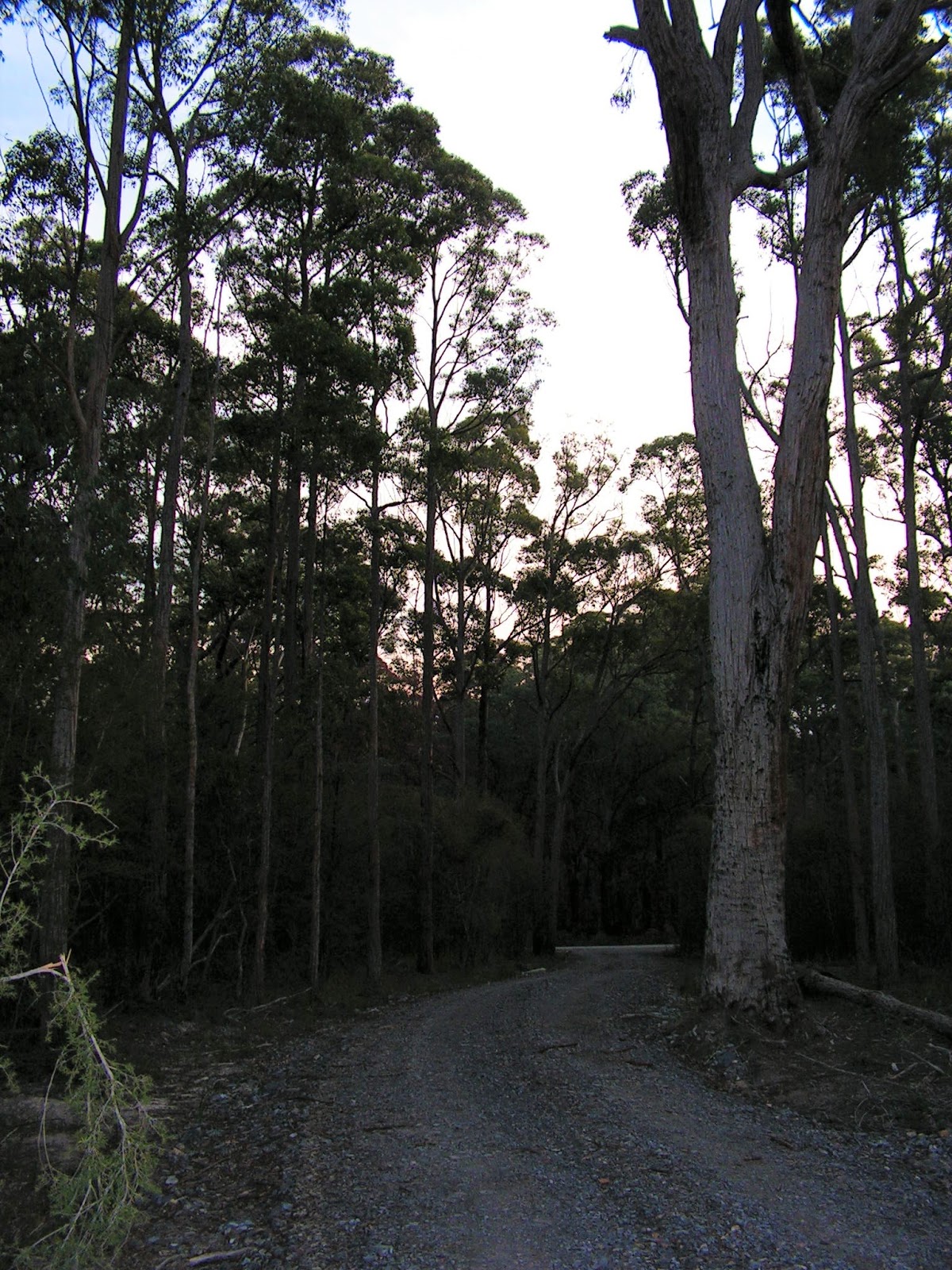
Trees

Tall and magnificent
small and wizened,
everything in-between;
More than an oxygen pump,
not only a carbon sink,
More than beauty to the eye
or shade and shelter
and bringer of rain, 
Greater than
its gift to ecology,
A tree
- gift of Life to life.


Copyright © Kayleen White, 2020 (where this date is different to the year of publication, it is because I did the post some time ago and then used the scheduling feature to delay publication) I take these photographs and undertake these writings – and the sharing of them – for the sake of my self expression. I am under no particular illusions as to their literary or artistic merit, and ask only that any readers do not have any undue expectations. If you consider me wrong, then publish me – with full credit and due financial recompense, of course :)

03 January 2020

Mallacoota

As the devastating fires rage and those there shelter on the beach, here are some photos from 2006 when I was working near Mallacoota. The first photo is actually from the road to the town of Cann River - lovely, but you can see why the fires are so devastating, and how dangerous it would be for people there.


Copyright © Kayleen White, 2020 (where this date is different to the year of publication, it is because I did the post some time ago and then used the scheduling feature to delay publication) I take these photographs and undertake these writings – and the sharing of them – for the sake of my self expression. I am under no particular illusions as to their literary or artistic merit, and ask only that any readers do not have any undue expectations. If you consider me wrong, then publish me – with full credit and due financial recompense, of course :)

24 December 2019

Summer in our garden

 The "north paddock" is a little more overgrown than I like, the butterfly bush needs a massive prune, and some of the plants are suffering from the heat, but it's been a while since I posted any photos, so here goes . . .


Copyright © Kayleen White, 2019 (where this date is different to the year of publication, it is because I did the post some time ago and then used the scheduling feature to delay publication) I take these photographs and undertake these writings – and the sharing of them – for the sake of my self expression. I am under no particular illusions as to their literary or artistic merit, and ask only that any readers do not have any undue expectations. If you consider me wrong, then publish me – with full credit and due financial recompense, of course :)

30 November 2019

The start of people


A raw world
 - untamed, full of threats
but full of potential.
A new species
 - untamed, full of threats
but full of potential,
Competing
 - potential and threat
vying for dominion,
vying still,
albeit
with wisdom gained
at hard cost
to people and place
alike.


Copyright © Kayleen White, 2019 (where this date is different to the year of publication, it is because I did the post some time ago and then used the scheduling feature to delay publication) I take these photographs and undertake these writings – and the sharing of them – for the sake of my self expression. I am under no particular illusions as to their literary or artistic merit, and ask only that any readers do not have any undue expectations. If you consider me wrong, then publish me – with full credit and due financial recompense, of course :)

21 October 2019

A partial cross post: change - including a bit on sailing :)

This was originally published at https://gnwmythr.blogspot.com/2010/07/transformation-and-change.html.

In seeking to accomplish this, I am very much aware that change is inevitable - it is one of the best lessons I learned from being Buddhist. It probably helps that I've seen so much change in my life. As a few of the smaller examples:
  • As a kid, from before I was old enough to go to school and for my first years of school, we lived in a place called Syndal (it is now part of Glen Waverley). In those days, it was on the outskirts of Melbourne, and we used to walk to a State forest at the bottom of the hill, and find all sorts of fascinating things like discarded snake skins. Now, it is not too far from the geographic centre of the population distribution of Melbourne. I went back there when I came back to Melbourne, many years later, and could not even recognise where our house used to be - all the houses had been developed, rebuilt, and retaining walls put in. The magnificent forest was, sadly, long gone ... I did buy a set of tuning forks, though, at a music shop, which I used for many years while meditating on sound and vibration.
  • After Syndal, we moved to Parkdale (I still support the Parkdale Seagulls [I signed the petition not to change the name of the women's team from the Seagulls to the vultures when the men's Parkdale Seagulls and Mentone Vultures combined to form the Parkdale Vultures, so I'm stickin' to that :) ] in the VWFL), where I had my first "first day" at high school [4]. I also went back there when I returned, as an adult, and was struck by the fact that the streets were half the size I recalled. (I was also struck by the fact that someone who had subsequently owned the house we had lived in had concreted over the front lawn and painted it green! Uuughh! Vandal - ENVIRONMENTAL vandal!)
  • After we moved back to Queensland (I was actually born in Brisbane, but was adopted at three weeks and then flown to Melbourne shortly after, in the back of a DC3; the next few years were, I found out later, a lonely time for my [adoptive] Mum), we wound up involved with the now defunct Mackay Sailing Club because of my interest in sailing (I've mentioned sailing and my love of the sea in passing elsewhere: it kept me going through some personally very challenging times as a teenager, as I came to terms with myself). One of the highlights of the year for me, both sailing and personally, was out two week stint during the August school holidays at Kurrimine Beach [5]. In the few years I went there, I witnessed the coral reef just off the beach being desecrated by tourists taking bits of coral (this was long before anyone had even started talking about Marine Parks), and I also witnessed the change of character of the regatta as it became better known, and we had more skilled but more aggressive sailors come up from down south for a warm winter's holiday. In fact, I have witnessed the changes in a few groups that happens when the groups becomes larger: this was no exception. I haven't been back there for ages, but was still sad to hear of the devastation caused to the area by Cyclone Larry (I am very pleased, though [proud, even], one of my nephews helped with the clean-up effort).
  • I have seen lots of changes happen since my return to Melbourne, not all for the better, but dome definite improvements to the physical environment and, above all else, to the psyche of the place and the people. Discrimination against LGBTIQ people is now largely prohibited (see here for a history of the changes, and here for the current legal situation in Victoria), and there are active changes to improve inclusion of a wide range of people - for instance, see here and here.
So, change is inevitable. What we can do, is seek to make the change constructive, rather than destructive. What we can also do is avoid the mistake of "throwing the baby out with the bath water", and see the elements of good that may exist in something that is, overall bad - for example, the teamwork that can be developed within military organisations, and seek to find a way to use that in a constructive way.

Copyright © Kayleen White, 2019 (where this date is different to the year of publication, it is because I did the post some time ago and then used the scheduling feature to delay publication) I take these photographs and undertake these writings – and the sharing of them – for the sake of my self expression. I am under no particular illusions as to their literary or artistic merit, and ask only that any readers do not have any undue expectations. If you consider me wrong, then publish me – with full credit and due financial recompense, of course :)

02 September 2019

A third yarn (more a note, really) about sailing

In my last "yarn", I mentioned moving to Mackay, and my concern about whether or not they had a sailing club. They did, and I had a stack of experiences - good and bad (and funny, and a mixed bag of insights into people) - there, but the one matter I want to write about now is learning.

I started off crewing for an experienced skipper, and eventually got to the stage where my parents decided to buy me a boat so I could be a skipper myself. One turned up which thought was a great bargain, but they decided to spend a few hundred dollars more and get something that was competitive and less likely to sink :)

Initially, I wasn't very good, until another skipper (from another class) took pity on me and crewed for me for a few weeks, getting me to do things like focus on the telltales on the sails instead of looking round and being distracted. His help worked, and I started improving - and passing on what I was learning and had learned to others, which is another series of posts.

But the value of learning was clear, and it backed up the value what I had started doing as soon as we bought the boat, which was pester - I mean, "respectfully ask" - other skippers for advice: "Mr Turner," I would pester (it was a different era, hence the "mister", but in some ways not so different, hence the "pester") "how do you choose what rake to put on your mast?"

I had a small notebook that I put all these different approaches into - and they were all different. I was going to just try them all out for myself, but was told I should ask them to clarify why they preferred to use their technique when someone else used another.

That challenging went over like a lead zeppelin, and when I heard a comment about everything being taken down as evidence and used against you, I decided to go back to my original approach of gather and then try for myself - which helped emphasise that everyone is unique, and what suits one person will - no matter how good it is - not necessarily suit another, despite NOTHING being wrong with that other person.

Sadly, many people in life (and especially the older - my lot - of engineers) are simplistic or judgemental in their thinking, and assume that, because something worked so well for them it MUST work for others, and accuse others of being defective when that is not the case (often because they WRONGLY feel that they must be defective if something works for them, but not others).

I've also noticed some - not all, by any stretch - younger people are less interested in learning from those who are more experienced, and more interested in pushing their own perceptions of ability and competence. I don't consider that to be an outcome of changed parenting so much as it is an outcome of changed economic and work circumstances. Sadly, we have gone down the US style of living, and are pushing people to be aggressive and self promoting, characteristics I consider utterly detestable, and have been making work so insecure that employees have to be aggressive just to get, let alone keep, a job.

The young people of today reflect the world my generation (pack of idiots we are) made.

Final note: I lost touch with the people in that sailing club a long time ago - partly because of some idiotically insensitive letters I wrote, partly because the club burned down and is no longer there, and partly because of the many changes I have been through. C'est la vie: things change, and, as my partner says, people (and places, and organisations) are in our life for a day, a season or a life. Mackay Sailing Club was in my life for a decade or so (a season of a life), and shaped the whole of it.

Copyright © Kayleen White, 2019 (where this date is different to the year of publication, it is because I did the post some time ago and then used the scheduling feature to delay publication) I take these photographs and undertake these writings – and the sharing of them – for the sake of my self expression. I am under no particular illusions as to their literary or artistic merit, and ask only that any readers do not have any undue expectations. If you consider me wrong, then publish me – with full credit and due financial recompense, of course :)